using our products
Dry Brushing – Your Complete and Honest Guide
Oct
Dry brushing, or dry body brushing, has gained new popularity on the internet, but has been around for ages. We have searched through all the dos and don’ts of dry brushing, as well as the how-tos, the benefits and the risks. We combined the most useful and interesting bits here for you, distinguishing actual facts from popular notions, debunking myths, and creating your true Dry Brushing 101.
Down towards the end, you will find our Top Tips for Your Dry Brushing Routine, gathered from personal experience.
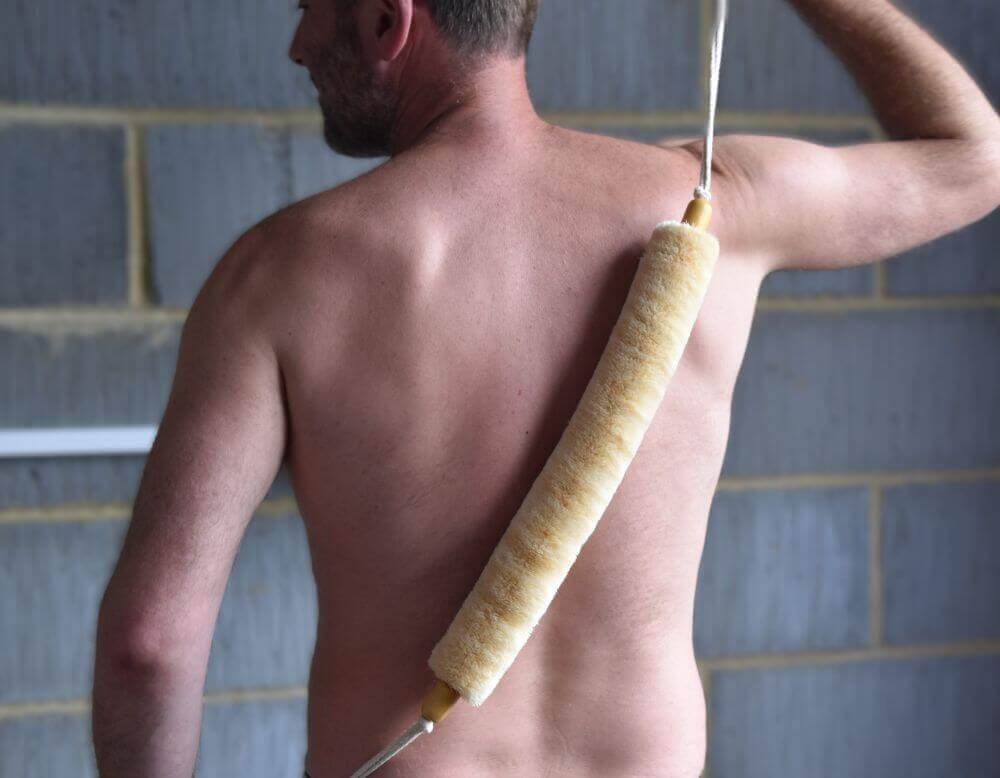
What is Dry Brushing?
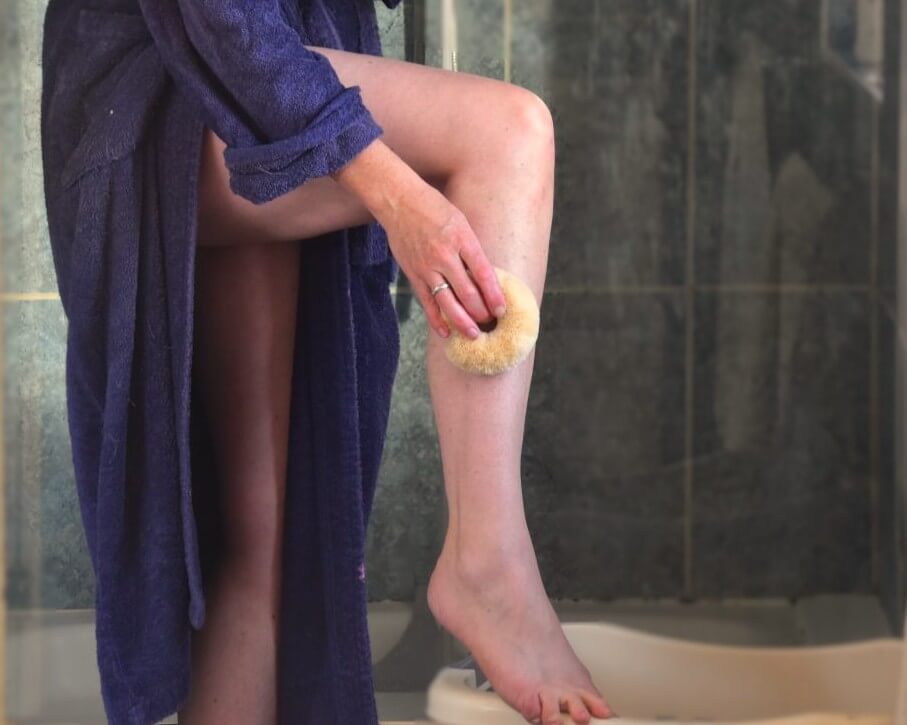
Dry brushing is the practice of brushing your skin all over, without the use of water or any product.
It is an exfoliating technique, clearing away dry and dead cells, to make your skin healthy and radiant.
Who Came up with Dry Brushing?
Exfoliating practises have been around for ages. In ancient Rome and Greece for example, people used sand and iron scrapers, but in combination with oil. In ancient China people seem to have used the dried fibres of a gourd – yes, that would be loofah.
Though dry brushing as such can also be found in traditional Russian and Scandinavian sauna routines, its modern use is mostly based on the Ayurvedic practice of Garshana.
In Sanskrit, Ayurveda means science of life. It is an alternative medicine practice originating from India, that has been in use and developing for some 5000 years.
Garshana is Sanskrit for friction. Applying this friction to the skin is believed to have many health benefits, which we will discuss below.
Towards the end of the twentieth century, the Finnish Paavo Olavi Airola popularised modern day dry brushing, claiming it would help digestion and detox.
What are the Benefits of Dry Brushing?
Dry brushing is claimed to have many health benefits, but very little are actually proven to be true.
Things it definitely does are:
- Exfoliating – The friction on the skin is increased by the lack of water, making dry brushing a very effective way to get rid of dead skin cells.
- Cleaning pores – The brushing stimulates your skin and removes dirt as well as cells. This also helps prevent outbreaks and ingrown hairs.
- Boosting energy – As the bloodstream and nerve system in your skin get stimulated, you can feel that energy streaming and quickening you.
- Increasing wellness – Taking a few minutes for self-care and focussing on nothing but your own body can help you feel more whole and happy.
Overall, this will result in you looking and feeling a bit more radiant; happy and healthy in your own skin.
What Does Dry Brushing Not Do?
Unfortunately, wider claims to health benefits of dry brushing are never proven, and most are not very likely either. This does not mean you can not experience them to some extend but it does mean you shouldn’t count on them.
The ideas that dry brushing is good for detoxification and lymphatic flow, helps get rid of cellulite and builds muscle appear far-fetched.
Your body does indeed get rid of metabolic waste via the skin, mostly through sweating. It therefore has been argued that exfoliating and cleaning the pores through dry brushing, helps optimise this process. Though there is technically no denying this claim, there is no reason to believe this offers a significant benefit to your natural detox system
Likewise, lymphatic flow might be slightly improved, and cellulite thereby decreased, by systematic, thorough massage. It is therefore not unthinkable that more rigorous dry brushing routines may indeed cause some minor improvement here. Healthy modern-day dry brushing however, is done gently (as explained below), and therefore only works on the surface of the skin, and not on the deeper layers underneath.
However, the increased blood flow may make your skin appear a bit more plump for a while after, which will make cellulite less visible.
The brushing does not reach your muscles and will not help shape them in any way. Some people say they become better visible by the improved lymphatic flow, but as stated above, there is no prove of this. And you’d have to do an awful lot of brushing to actually tone your arm muscles from the repeated movements.
When and How Often Do I Dry Brush?
Dry brushing is incredibly easy to build into your everyday routine. That is not to say you should start with brushing every day right away. Depending on your skin, two or three times a week may be your maximum.
We recommend starting with brushing twice a week and gradually increasing frequency to up to once a day if it feels good to you. Your skin should feel soft and look its normal tone throughout the day. It will look red and may feel slightly tingling during and directly after brushing, but this should fade away soon enough. If your skin stays red, or otherwise irritated, flaky or damaged, decrease your brushing frequency. Also make sure you don’t apply to much pressure to your brush.
It is best to dry brush before taking a shower or bath, as this will help cleanse off all cells and dirt rubbed loose. Find a moment where you can spend five extra minutes on you. This works great as an energising moment in the morning but may also be a relaxing moment at the end of the day. Find what feels good for you.
Your skin is also more susceptible to hydrating products after dry brushing. We would recommend a simple drop of oil for a full spa feeling.
What Do I Dry Brush?
You can dry brush all of your skin, as long as it’s healthy. How much you actually brush, is up to you.
For your face, you may want a softer brush or loofah than for the rest of your body. You could try our Sisal Facial Scrubby or, as I personally like, wear our Sisal Soap Saver Bag as a mitten around your fingers and use that – it allows you to adjust pressure at a fingertip’s width! For the absolutely most gentle option, why not try a Ramie Bath Puff?
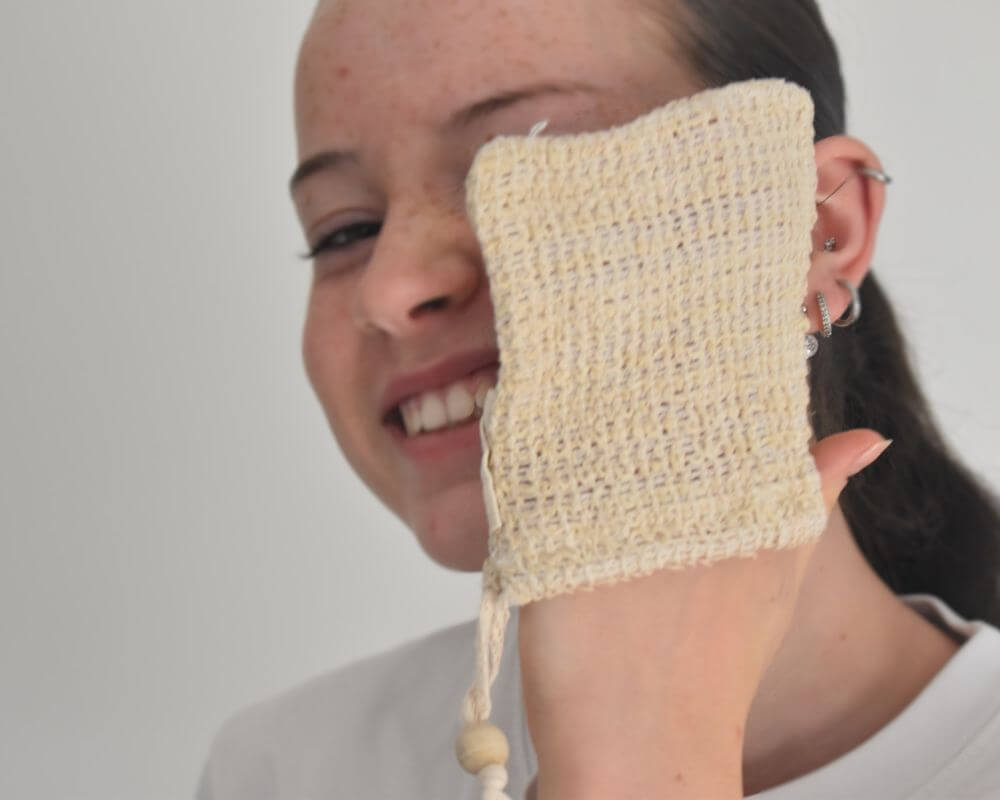
Some people may find brushing just doesn’t feel pleasant on this softer skin, whereas others swear by it as an invigorating facial massage; to get rid of those last bits of make-up; or just to get that healthy glow, that doesn’t require any make-up at all.
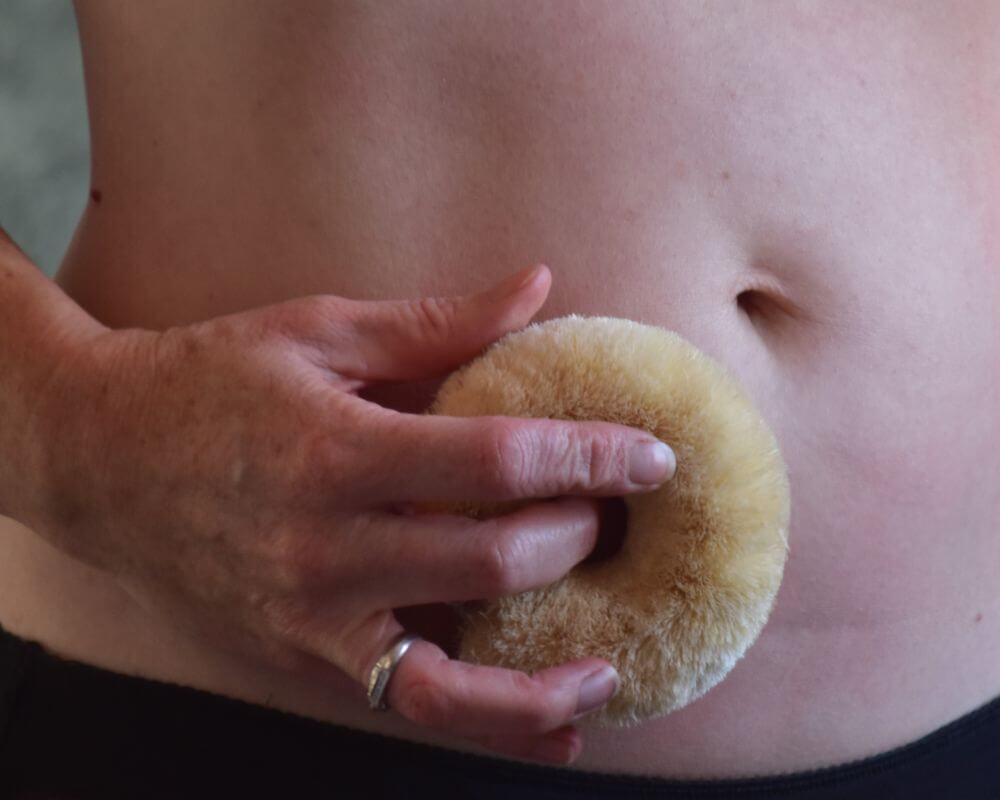
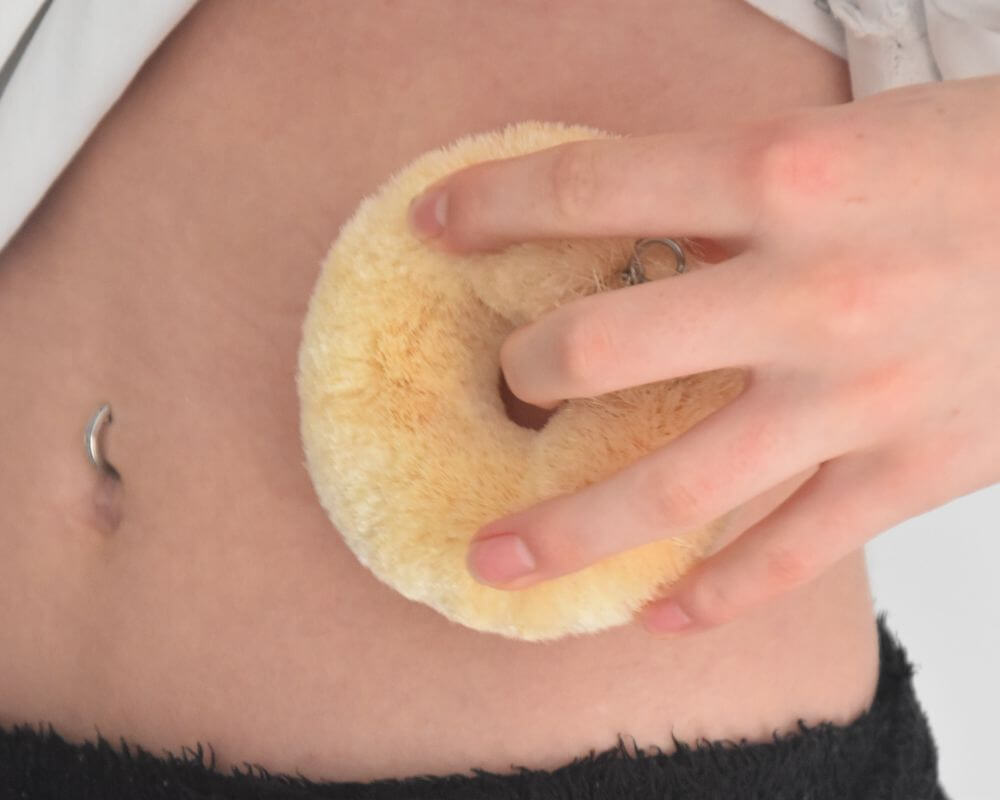
Inner thighs and bellies, may also have softer skin and be more sensitive for one person than another. you may want to experiment with what kind of brush you use and how much pressure you apply, or you may want to skip a bit.
As long as it feels good to you, there is no reason not to dry brush any particular body part.
Always steer clear of irritated or damaged skin, though, and skin affected by conditions like eczema or psoriasis, to prevent further damage and the possible spread of infection.
How to Dry Brush
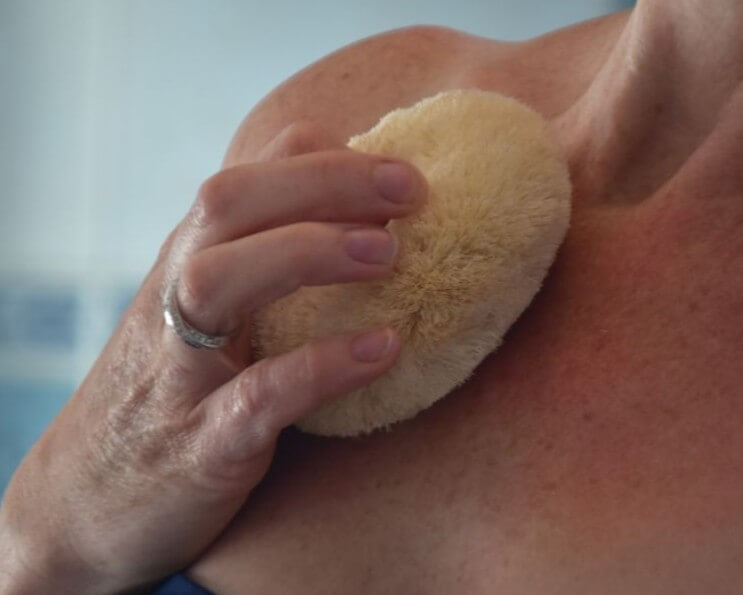
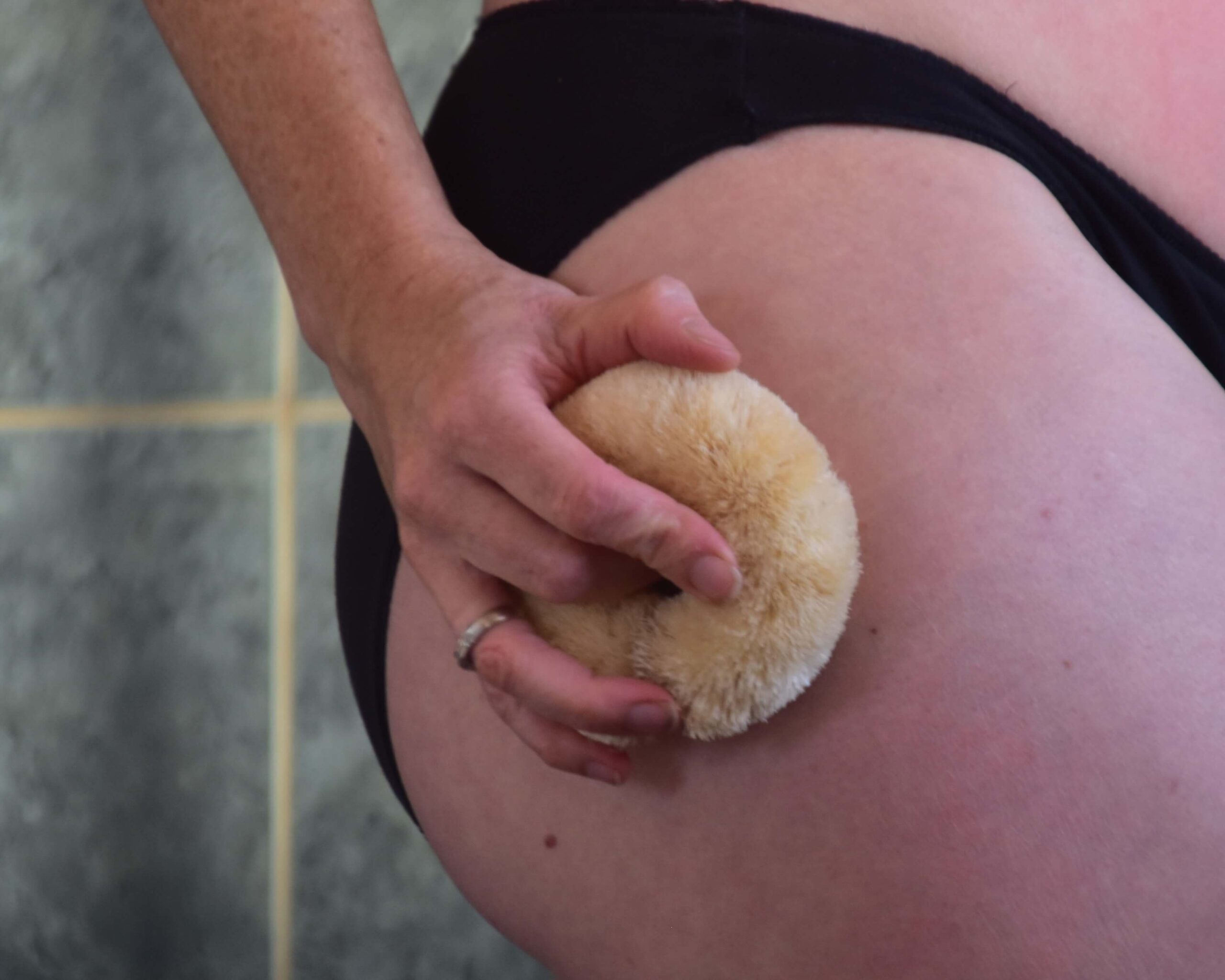
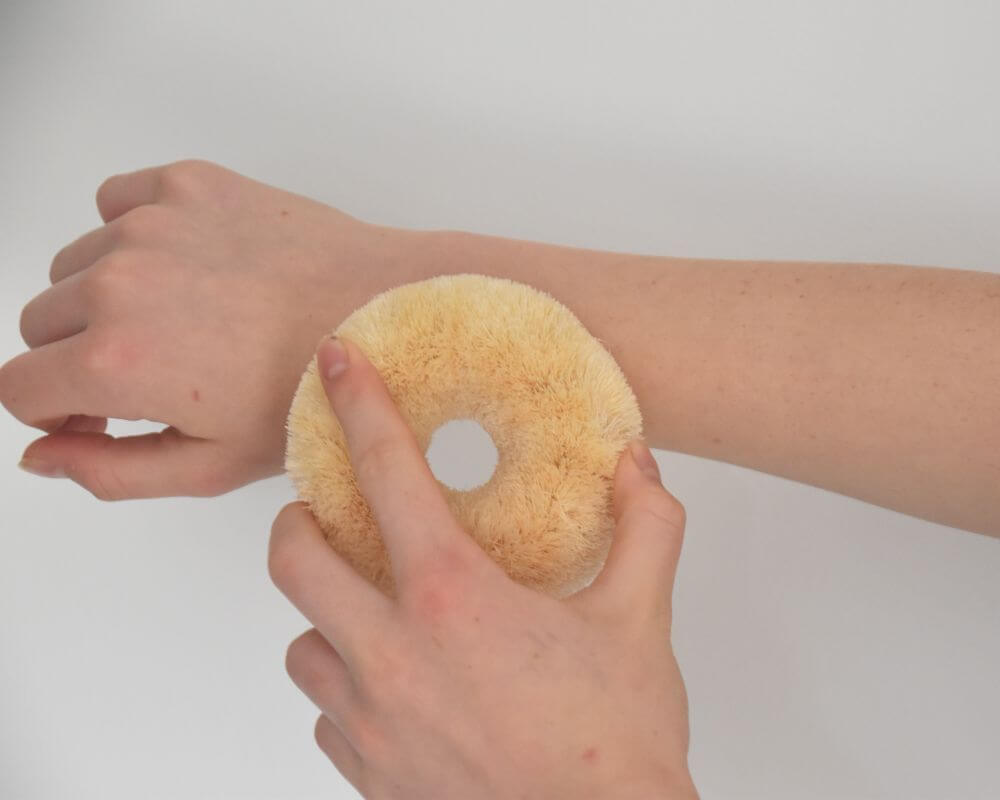
- Gently stroke your brush, alternating longer strokes with circles, as they feel good to you, against your skin.
- Start at your feet and work your way up, all around your legs, towards your belly.
- Then start at your hands and work your way all around your arms, back towards your chest.
- Don’t press too hard. Dry Brushing should never hurt.
Will I Get Sick After Dry Brushing?
No, probably not. It is in no way likely to be linked, though you may find reports online of people who claim they do. The idea is that the sudden intensification of the lymphatic drainage and the increased processing of toxins upsets your body and makes you feel sick or queasy. As stated above though, there is no proof and no reason to believe dry brushing will intensify detoxification.
If you make sure you stay well hydrated -especially if you start your day with dry brushing since we all wake up slightly dehydrated in the morning- and continue to have balanced meals and exercise throughout the day to make sure your body stays in a proper condition, dry brushing can only get you benefits. The simple rule is: the better you take care of yourself, the better you feel.
Top Tips for Your Dry Brushing Routine
- Always working in the general direction of your heart makes sure you’re at least not working against your lymphatic system.
- You may find clips on YouTube showing an intricate system of specific strokes and pads, claiming to actively help lymphatic drainage, but there is no proof this works and no need to make your brushing routine this complicated.
- However, you may find a stricter routine helps you to focus and/ or to get into a flow that will not just give you healthy skin but also a truly mindful moment. By all means, if it helps you to count strokes or make specific movements in a particular order, go for it!
- If you don’t want to brush every day, you may want to take that moment to just gently massage your skin with your fingertips on the days you don’t. This can help you keep a quiet you-moment in your routine.
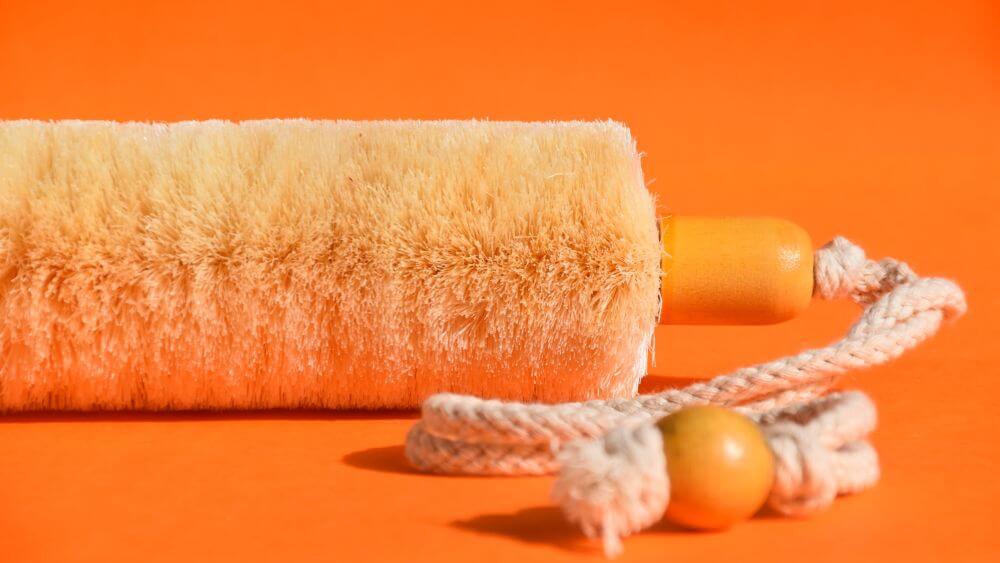
- For brushing we would recommend using a sisal body brush. Your brush should sit in your hand comfortably and be easy to handle. It should not feel hard.
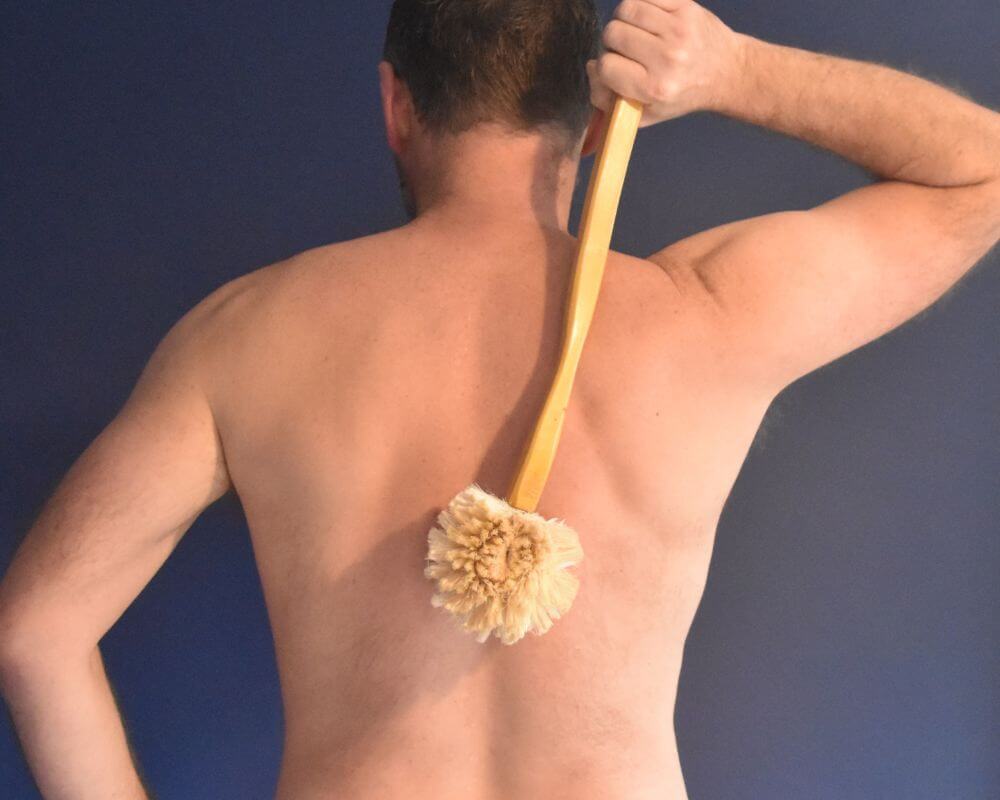
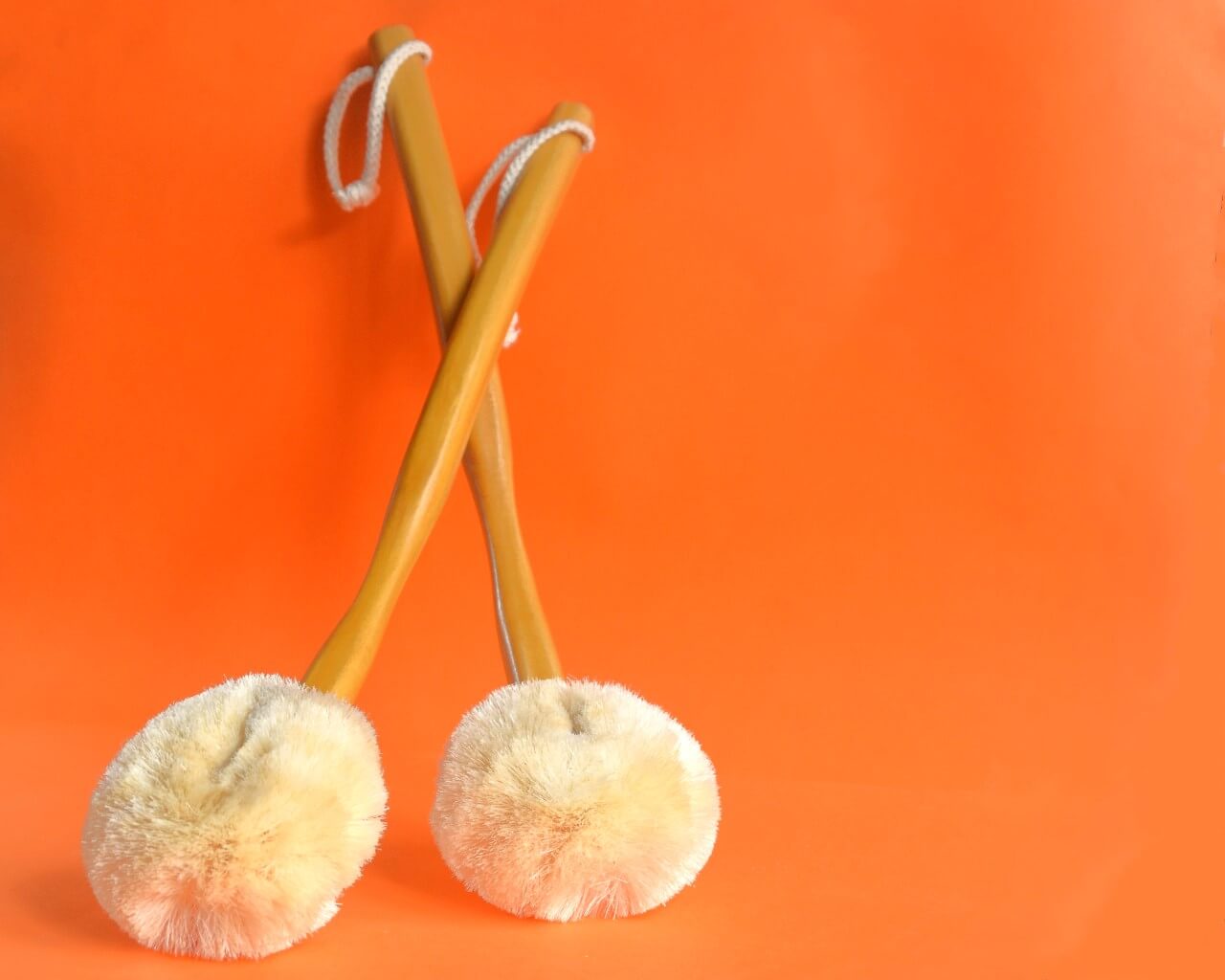
- If you want to brush your entire body, including your back, a brush with a handle or rope is ideal to easily reach everywhere.
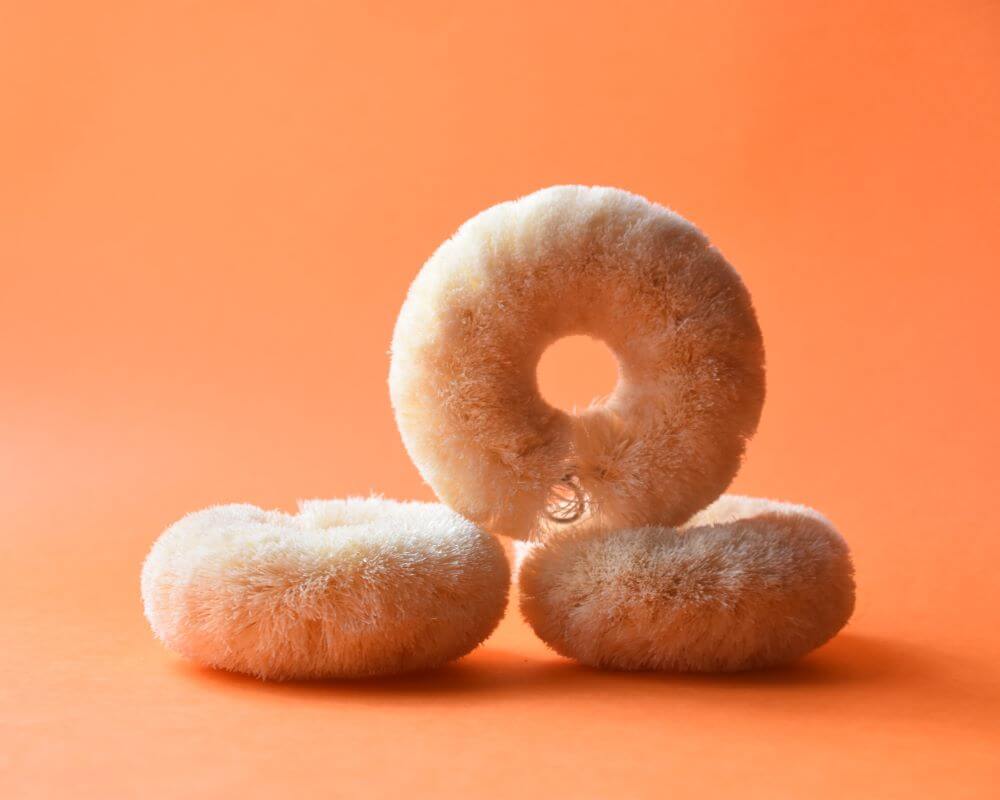
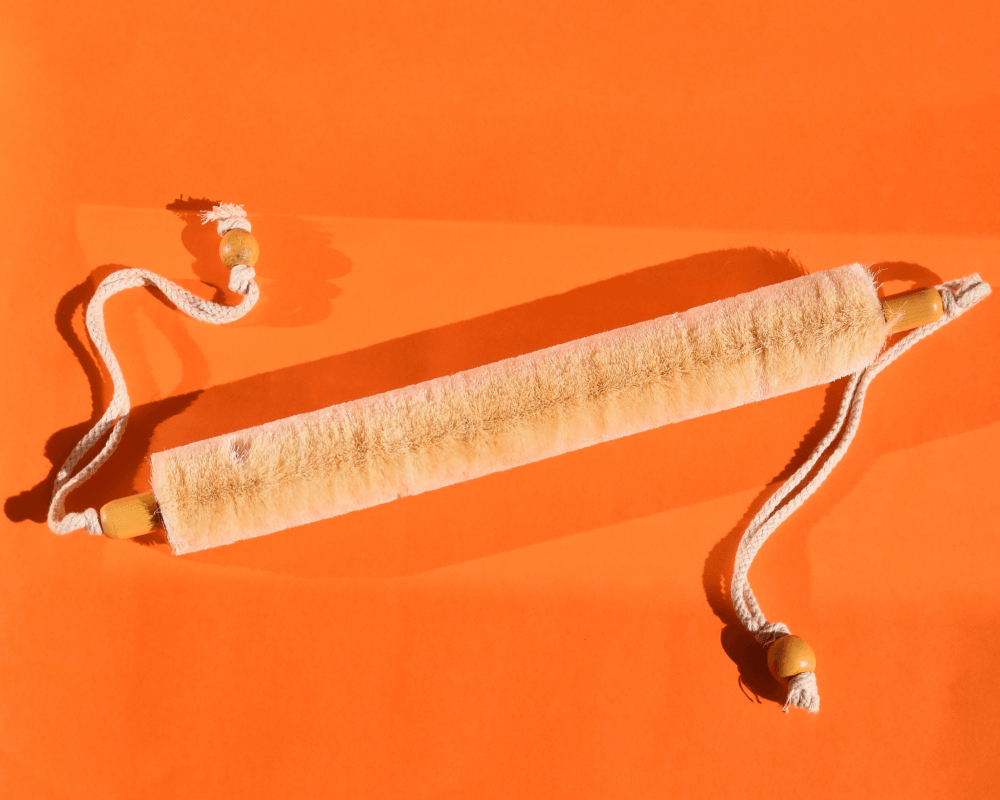
How Do I Clean My Body Brush?
You don’t want to keep a brush full of death skin cells, we get that. Nor do you want to buy a new one every month. To make the most of your sisal brush or back brush, simply shake and tap out after each use. Depending on brushing frequency, clean more deeply once every fortnight or month. Simply wet your brush and hands, work up a soapy lather with your fingers all through the brush and then rinse thoroughly with hot water. Leave to dry completely, preferably hanging down, otherwise lying on a clean towel, in a well-ventilated room.
And lastly
If you find dry brushing is not for you after all, nothing is wasted. You can use your body brush or back brush is the shower, where it will feel slightly softer, but will still help exfoliate and get a lush scrub.
Main sources used: – https://health.clevelandclinic.org/the-truth-about-dry-brushing-and-what-it-does-for-you
– https://paavaniayurveda.com/blogs/the-ayurvedic-lifestyle/garshana?srsltid=AU7gw4VxjNIzstu7EBjczW_0m07hn8cUy7OQwYt0o0Vy69yaJr_lzfGD
– https://provinceapothecary.com/blogs/news/the-history-of-dry-brushing?srsltid=AU7gw4XL1gaQ2WVTudnHacW-u0ak1iA9NKBBI4_Je0PWmsK6p1JVTkoW
– https://www.dr-jetskeultee-skincare.nl/indemedia/droog-borstelen/
– https://lotbynature.com/blogs/artikelen/dry-brushing-uitleg-voordelen-en-toepassing
– https://lotbynature.com/blogs/artikelen/dry-brushing-hoe-stap-voor-stap-uitgelegd?srsltid=AU7gw4VvYFqiBoUbskkraAfPLiXGZg_k9WsCGsHBc6W9YxTHdx3zVifG
– https://www.boots.com/inspire-me/beauty-advice/body-care/guide-to-dry-body-brushing?srsltid=AU7gw4UWbWLTAGNH_6Zb_O1UZP_fyxyVZBZhfPX9ByIotOnkM8_zgcQc
– https://ayurveda.com/ayurveda-a-brief-introduction-and-guide/
– https://livinglibations.com/pages/happy-humors-dry-brushing-lymph-love-and-cellulite
– https://pmc.ncbi.nlm.nih.gov/articles/PMC3567429/
Shop our sisal and loofah ranges here